

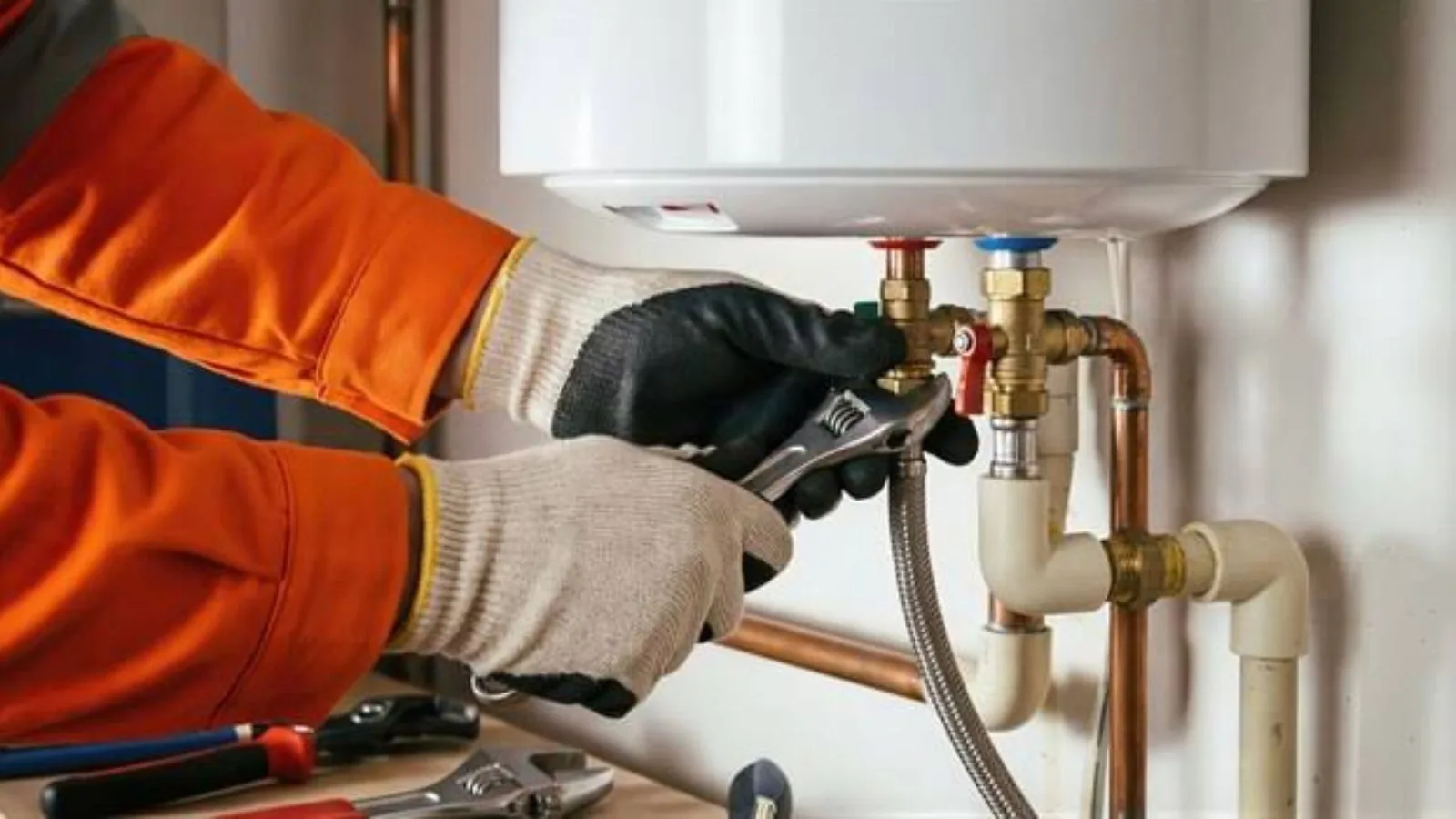
Why a water heater leak is different
A tank water heater stores 40 to 80 gallons or more. When the tank corrodes through or a fitting fails, that stored volume can empty onto a floor within minutes, and then the supply line keeps feeding it. That makes a water heater leak a quick, sizable loss rather than a slow drip.
This page is about the heater itself as the source. A burst supply line elsewhere in the house is on the burst pipe page, and a leaking appliance such as a washer or dishwasher is on the appliance leak page.
Shut the heater down safely
Gas and electric heaters need different first steps.
Electric heater
Turn off the breaker for the heater if you can reach the panel on dry ground. Do not touch the panel if the floor around it is wet.
Gas heater
Turn the gas control to pilot or off. If you smell gas, leave the house and call the gas utility or 911 first.
Cold water inlet
Close the shutoff valve on the cold water line above the heater, or close the main.
Relief valve discharge
A pipe running from the temperature and pressure relief valve that is dripping can signal a different problem. Mention it to the plumber.
Once the heater is isolated, call the 24/7 line so extraction can begin.
When a leaking heater is an emergency
If water is pooling, spreading under walls or reaching carpet, call right away. Heaters often sit in garages, closets or laundry rooms, where water spreads along the slab and under adjoining walls.
Florida homes commonly place heaters in garages, so water can reach the garage door seal and spread outdoors, or into the interior through a shared wall. Drywall at the bottom of that wall wicks water upward, so quick extraction matters.
Where tank water ends up
The location of the heater shapes the damage.
| Heater location | Usual wet area | What to inspect |
|---|---|---|
| Garage | Slab, stored boxes, shared wall base | Baseboards and drywall inside the house. |
| Interior closet | Closet floor, adjacent room flooring | Carpet pad and subfloor. |
| Attic | Ceiling and insulation below | Ceiling stains and sagging drywall. |
| Laundry room | Flooring and cabinet bases | Cabinet floors and vinyl seams. |
Tank empty and floor wet?
Call now. Extraction can begin once the heater is off.
Cleanup after a water heater failure
Crews extract standing water, check moisture in walls and flooring and remove materials that cannot be dried. Wet cardboard, stored items and carpet pad are usually the first to go. Hard floors and concrete dry well when treated quickly.
Drying uses air movers and dehumidifiers, with readings taken until the structure is dry. Our structural drying page explains how that works.
What shapes water heater cleanup costs
The loss size and materials set the scope.
- Water volumeA full tank spreads wider than a small leak.
- LocationGarage slabs dry differently than carpeted closets.
- MaterialsCarpet, drywall and stored items drive removal.
- Drying timeEquipment runs until readings return to normal.
- Heater replacementThe plumber or installer handles the new heater.
Sudden tank failures are often covered by homeowners insurance, while wear and neglect over time often are not. Check your policy and ask your insurer. We explain scope and price before work starts.
Standards behind this page
Drying after a heater leak follows the published ANSI/IICRC S500 standard. A plumber handles the heater itself, and a licensed electrician should check any wiring that got wet.
Water heater leak questions in Dunedin
Yes. This line is open 24/7. Shut off power or gas and the water supply to the heater, then call.
Yes, if you can do so safely. An electric heater is turned off at the breaker, and a gas heater at its control. If you smell gas, leave and call the gas utility or 911.
A plumber can tell. A leak from the tank body usually means replacement. A leak from a fitting or valve can often be repaired.
Sometimes. Quick drying can save drywall that is not saturated. Soaked or swollen drywall is removed.
Many manufacturers list a lifespan on the label. Ask a licensed plumber to inspect an older tank, particularly if you see rust or moisture at the base.
Water heaters in Dunedin garages
Florida homes commonly put the heater in a garage or an exterior closet, including homes in Dunedin neighborhoods like Scotsdale. Heat and humidity can age tank hardware, so rust at the base is worth checking before a leak starts.
If you rent or own near the downtown area and share a wall with a neighbor, tell the neighbor or landlord about the leak so they can check the adjoining side.