

What water does to drywall
Drywall is gypsum between paper faces. When it gets wet, the paper absorbs water, the gypsum softens and the board loses strength. A short wetting that is dried fast can sometimes be saved. A long or repeated wetting usually means the board has to come out.
This page covers walls and baseboards. Ceilings are on the ceiling water damage page, and the drying process is explained on the structural drying page.
Signs of wall water damage
Look for bubbling or peeling paint, a stain that spreads, baseboards that lift or swell, a soft spot when pressed, a musty odor and warm or damp spots. Water behind the wall may not show on the surface.
A moisture meter and a thermal camera show how far the water has traveled. Moisture often travels upward from the base of the wall, so the wet area can be taller than the stain.
Where wall water comes from
Common sources.
Supply line or fixture
Leaks in the wall cavity or from a bathroom.
Roof or window
Water running down inside the wall.
Appliance
Water spreading along the floor into the wall base.
Flood or storm
Water entering at the bottom.
Hidden moisture behind walls
A wall can look fine and still be wet inside. Paint hides moisture, and the first clues are often a musty smell or a baseboard that has started to lift. Thermal cameras show temperature differences that point to wet areas, and a moisture meter confirms them.
If a leak has been running behind a wall for days, the stud cavity, bottom plate and insulation can all be wet. Opening a small inspection hole is often the quickest way to know what is inside.
Paint, texture and finishing after drying
Repair does not start until the wall reads dry. Then new drywall is hung, taped, mudded, textured and primed. Matching an old orange peel or knockdown texture takes practice, and the paint should cover the full wall, not just the patch.
If you plan to repaint a larger area, ask for the wall to be sealed with a stain-blocking primer. A stain that bleeds through usually means the source or the moisture was not fully handled.
Wall soft or stained?
Call and describe it.
Save or replace drywall
A general rule of thumb.
| Condition | Usual decision | Notes |
|---|---|---|
| Dry and firm after a short wetting | Dry and repaint | Check behind the board. |
| Wet, swollen or soft | Remove | Strength is lost. |
| Contaminated water | Remove | Porous and hard to clean. |
| Mold visible | Remove and see mold page | Moisture was long-term. |
Flood cuts, baseboards and insulation
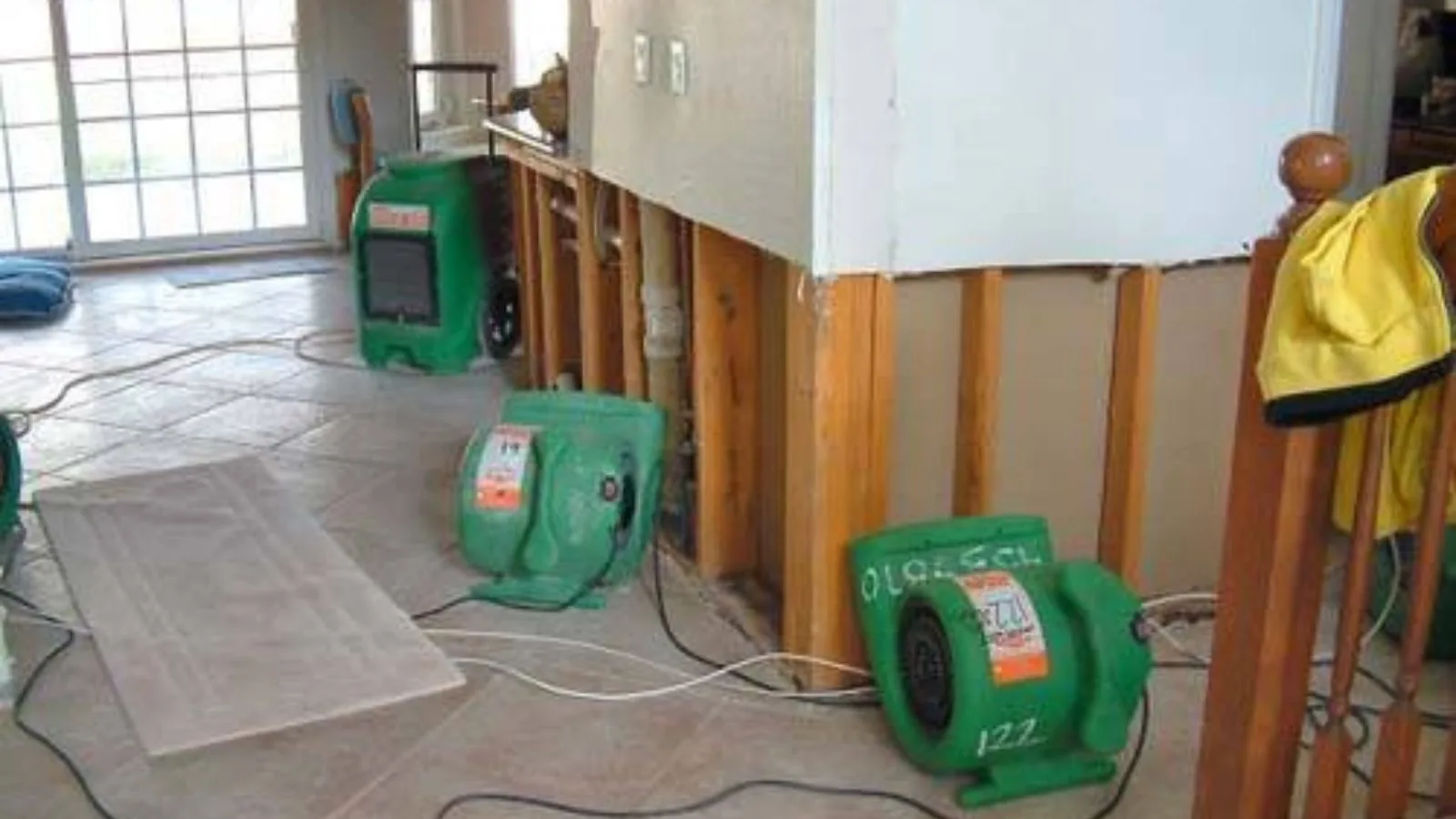
When walls are wet, crews often cut the drywall a foot or two above the water line. That cut, sometimes called a flood cut, exposes the cavity so it can be dried. Wet insulation is removed because it holds water against the framing.
Baseboards are taken off to dry the bottom of the wall. After the cavity reads dry, new drywall, paint and trim go back. Repairs match texture and paint where possible.
What drives wall repair costs
Cost depends on the wall.
- Height and length of wet wallLarger areas cost more.
- InsulationWet insulation is replaced.
- Texture and paintMatching takes skill.
- Drying timeSet by readings.
- Source repairPlumbing or roof repair is separate.
Insurance often covers sudden wall damage from a burst pipe and often not long-term leaks. Check your policy and ask your insurer. We explain scope and price before work starts.
What usually causes wet walls
Walls get wet from above and from inside. A ceiling leak is covered on the ceiling water damage page, a failed supply line on the burst pipe page, and drying the cavity is explained under structural drying.
Safety steps before repairs
Do not cut into a wall that may hold wiring while it is wet. Keep the power off to that wall until an electrician checks it. Wear a mask and gloves around wet drywall dust.
Cutting out wet drywall is a job for a crew with containment, so call before you start.
Wall water damage questions in Dunedin
Sometimes. If it is firm and not contaminated it may dry. Soft or swollen board is removed.
When needed. Drying a cavity often requires opening it.
Crews aim to match. Older paint and texture can be difficult to match.
A moisture meter and a thermal camera show it.
Not until the wall is dry. Painting over moisture traps it.
Walls in Dunedin homes
Older Dunedin homes may have plaster or older drywall with different behaviors when wet. Newer homes use standard drywall. Ask the crew to check the wall type.
If a wall repair is part of a bigger project, ask the City of Dunedin building department about permits.