

Wall still damp days after the leak was fixed?
Fixing the leak stops the water. It does not dry the drywall, framing, flooring and insulation that got wet. A wall that feels cool, a floor that smells musty or paint that bubbles weeks later all point to moisture that is still inside.
Structural drying and dehumidification is the trade name for the process that fixes this. It uses measurement to find hidden moisture and equipment to remove it.
Water mitigation explained
Water mitigation means the steps that stop water damage from growing. That includes stopping the source, extracting water and drying the structure. Drying is the part that takes days and the part that is easiest to get wrong without measurement.
The industry standard is ANSI/IICRC S500. It describes how water loss classes and drying goals are set, and you can ask any company if its crews work to it.
How structural drying works
It follows a set pattern.
Moisture mapping
Meters and thermal cameras find wet areas, which are marked and recorded.
Equipment setup
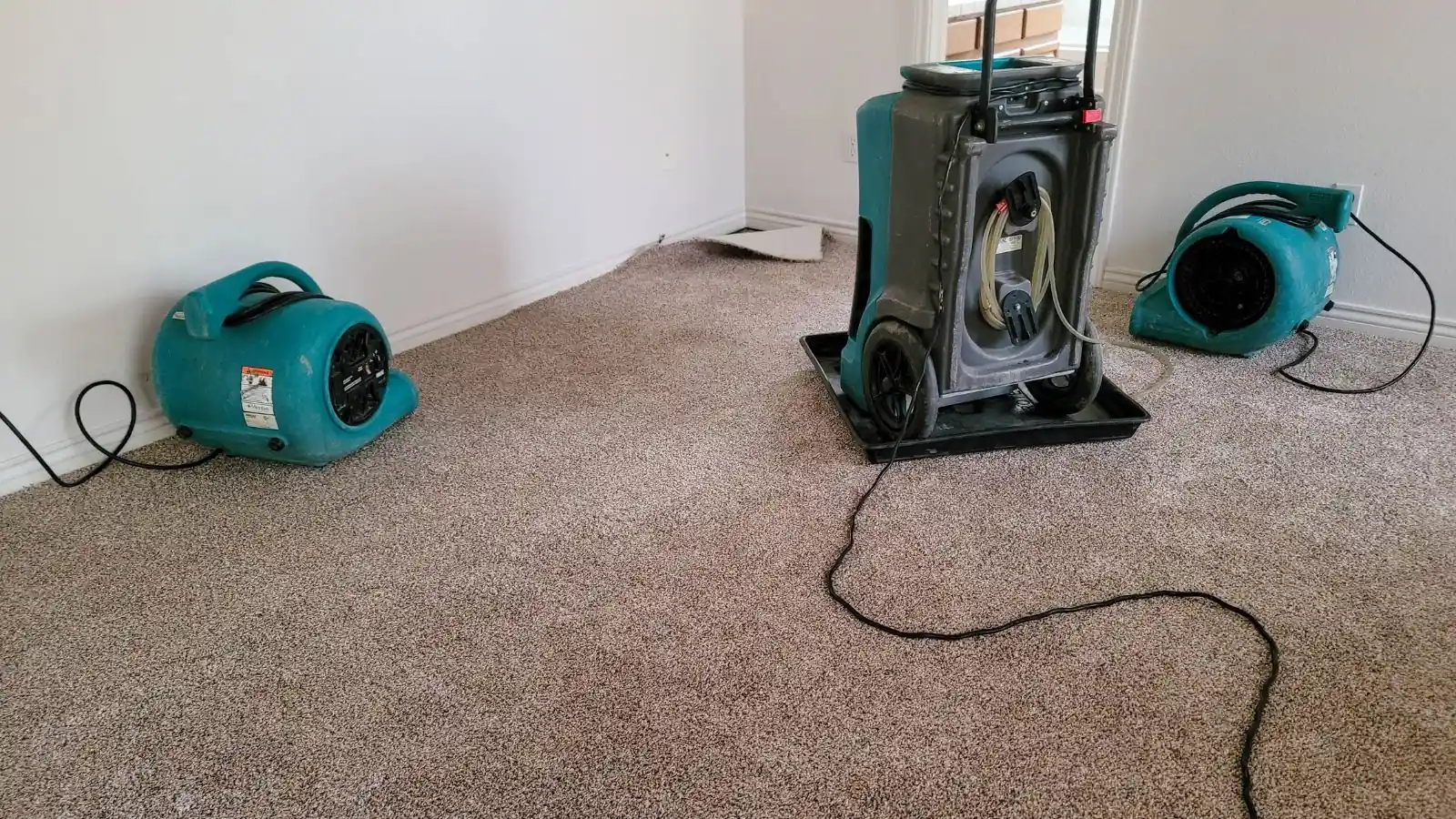
Air movers push air across wet surfaces, and dehumidifiers pull moisture out of the air.
Daily readings
Crews return to take readings and move equipment until the structure meets dry goals.
Drying ends when readings match dry reference values, not when a set number of days passes.
What goes wrong when drying is rushed
A surface that feels dry can still be holding water. Drywall can look fine while the stud cavity behind it stays wet, and a floor can feel dry while the subfloor under it does not. If the equipment is removed too soon, the moisture settles back and mold becomes a risk.
That is why dry is defined by readings taken in the same places on each visit. If a crew cannot show you the numbers, ask for them. Documented readings also help with an insurance claim.
Need your building dried?
Call the 24/7 line and describe what got wet.
Drying equipment in plain words
Each tool has a job.
| Equipment | What it does | Where it is used |
|---|---|---|
| Moisture meter | Reads moisture in wood, drywall and concrete | Mapping and daily checks. |
| Thermal camera | Shows temperature patterns that hint at wet areas | Finding hidden moisture. |
| Air mover | Moves air across surfaces to speed evaporation | Floors, walls and carpet. |
| LGR dehumidifier | Removes moisture from air at low humidity | Whole-room drying. |
| Desiccant dehumidifier | Dries air in cooler or very damp conditions | Specialized jobs. |
How long drying takes
Drying often takes several days, depending on the materials, the amount of water and how humid the air is. Florida's humidity makes the work harder, because the air already holds moisture. That is why dehumidifiers run with the air movers and why doors and windows stay closed.
A job's duration is decided by readings. A crew that quotes a fixed number of days before measuring is guessing.
What drives structural drying costs
Drying is priced by equipment and time.
- Class of water lossLarger wet areas and denser materials need more equipment.
- Square footageRooms and walls affected.
- MaterialsHardwood and concrete dry slowly.
- Equipment daysSet by readings.
- Monitoring visitsDaily checks until dry.
Insurance often covers sudden water damage, including the drying. Check your policy and ask your insurer. We explain scope and price before work starts.
Where drying fits in the rest of the job
Drying starts after the water is removed, as the water extraction page explains. It protects walls covered on the wall and drywall page and floors covered on the hardwood floor page, and it is the main defense against the dark spotting described on the mold remediation page.
Safety steps while drying runs
Keep cords off wet floors, do not unplug or move equipment, and keep children and pets away from running machines. Tell the crew if anyone has asthma or allergies.
Equipment runs for days. Ask the crew what noise and power to expect so you are not surprised.
Structural drying questions in Dunedin
Air movers and dehumidifiers run for days and add heat. That is normal for drying.
Please do not. Equipment works best running continuously. Talk to the crew about noise.
It removes moisture from the air so wet materials release more water into it.
To read moisture levels and adjust equipment. The readings decide when drying is done.
Possibly. Moisture can be inside the wall or under the floor. A meter or thermal camera can tell.
Drying in a humid Dunedin climate
Dunedin's Gulf coast humidity means the air is rarely dry. That is a challenge for drying and a reason to use dehumidification, not just fans.
If your home has central air, keep it running as the crew advises, and keep windows closed so outside humid air does not add to the load.