

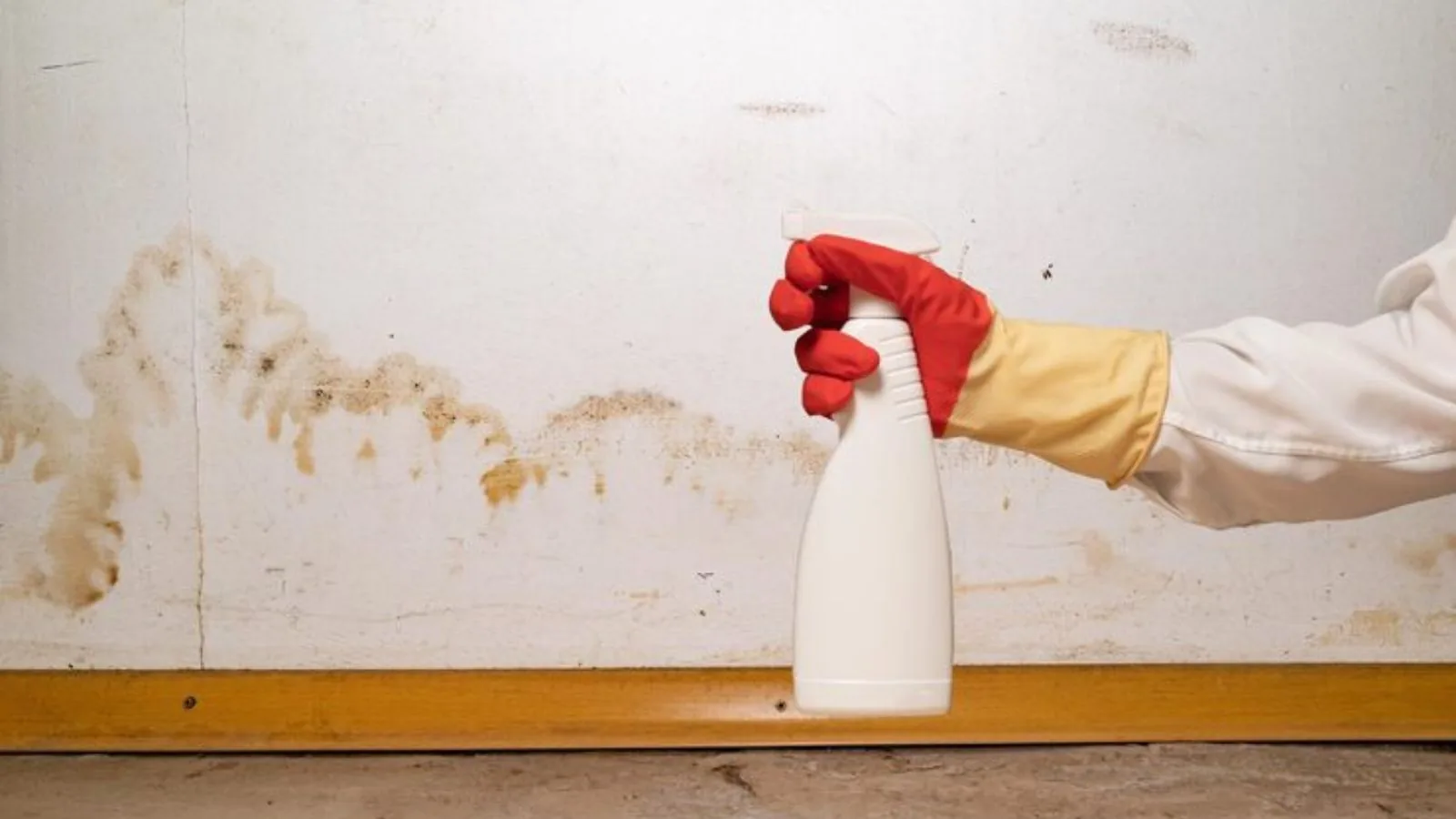
Dark spots in the corner of the shower, a closet wall or a ceiling after a leak?
That is how many people first notice mold. Spots appear where a leak left the wall damp, such as under a sink, behind a toilet, in a closet that touches a wet wall or on a ceiling below an air handler. The restoration term for fixing it is mold remediation.
Mold is a moisture problem first. The leak has to be stopped and the wet material dried before any mold work makes sense.
What mold needs to grow
Mold needs moisture, a food source such as drywall paper, wood or dust, and time. The U.S. Environmental Protection Agency says that if wet materials are dried within 24 to 48 hours, mold generally will not grow. In humid Florida, that window is hard to meet after a leak, which is why quick drying matters.
Without moisture, mold stops growing. That is why cleaning a stain without fixing the water source tends to fail.
Testing and inspection
Callers often ask for an inspection or independent testing. A mold inspection finds the visible mold and the moisture behind it. Testing can include air or surface samples. Independent clearance testing, done by someone who is not doing the removal, is used after remediation to confirm the area is ready.
Florida licenses individuals as mold assessors and mold remediators under Chapter 468, Part XVI of the Florida Statutes, and the Florida Department of Business and Professional Regulation administers it. It does not license businesses. Ask whether the person doing the work holds the right state license.
Testing and remediation compared
They are different jobs.
| Step | What it does | Who does it |
|---|---|---|
| Inspection | Finds mold and moisture sources | Assessor or inspector. |
| Sampling | Identifies mold in air or on surfaces | Assessor. |
| Remediation | Contains and removes mold | Remediator. |
| Clearance testing | Checks that the area is ready | Independent assessor. |
Mold after a plumbing leak, a roof leak or an air handler
Callers most often describe mold that follows a specific leak. An upstairs toilet that wet a ceiling below, a leak under a bathroom sink, a roof leak into a closet or a clogged AC condensate line are common starting points. The mold shows up near the water, usually on the ceiling or the lower part of a wall.
Tell us what leak came first. That tells the crew where to look for hidden moisture, and which related page applies, such as ceiling water damage or AC leak damage.
Mold after a leak?
Call and describe where you see it.
How mold remediation works
Industry practice follows ANSI/IICRC S520, the published standard for mold remediation. You can ask any company whether its crews work to it.
Fix the moisture
The leak is repaired and wet materials are dried.
Contain
Plastic barriers and negative air machines keep spores from spreading.
Remove and clean
Porous materials with mold are removed. Hard surfaces are cleaned with HEPA vacuums and damp wiping.
After removal, materials are dried and the area is checked. No honest company promises mold will never return, since that depends on moisture control.
Mold and selling or financing a home
A buyer's lender or an inspector may ask for mold to be addressed before a sale or a loan closes. In that case, documentation matters: the moisture source repair, the remediation scope and a clearance test from an independent assessor.
We cannot promise how a lender or buyer will respond. Ask the lender what documentation it requires, and ask a real estate professional about disclosure.
What drives mold remediation costs
Mold work varies a lot.
- Area affectedLarger area, larger scope.
- MaterialsDrywall removal versus surface cleaning.
- ContainmentBarriers and air filtration add to the job.
- TestingInspection and clearance testing are separate costs.
- Moisture repairThe plumber or roofer fixes the source.
Insurance may cover mold that results from a covered water loss, and policies often limit mold coverage. Check your policy and ask your insurer. We explain scope and price before work starts.
Find the water first
Mold follows moisture, so the source matters. A leaking line is covered on the burst pipe page, and wet drywall that was never dried is explained on the wall and drywall page. The structural drying page explains how a building is dried and measured.
When to call and what not to do
Do not disturb large areas of mold, do not paint over it and do not mix bleach with ammonia. Call a professional for areas larger than about 10 square feet, or after sewage or flood water.
Health questions belong to a physician.
Mold questions in Dunedin
Small areas of surface mold on hard surfaces can be cleaned, but mold in drywall or insulation needs removal. Fixing the moisture comes first.
Health questions belong to a physician. This page does not give medical advice.
Sometimes. An inspection and clearance testing can document the job. Ask whether your situation calls for it.
Yes. The Florida Department of Business and Professional Regulation licenses individual mold assessors and mold remediators. Ask to see the license.
It can if moisture returns. Controlling humidity and leaks is the best protection.
Mold and humidity in Dunedin
Pinellas County has a humid climate, and air conditioners and bathrooms carry a lot of moisture. After a leak, closets, bathrooms and attics are the places to check.
If you are checking a home near the water, like those along Edgewater Drive, check the AC condensate line, window seals and bathroom fans.