

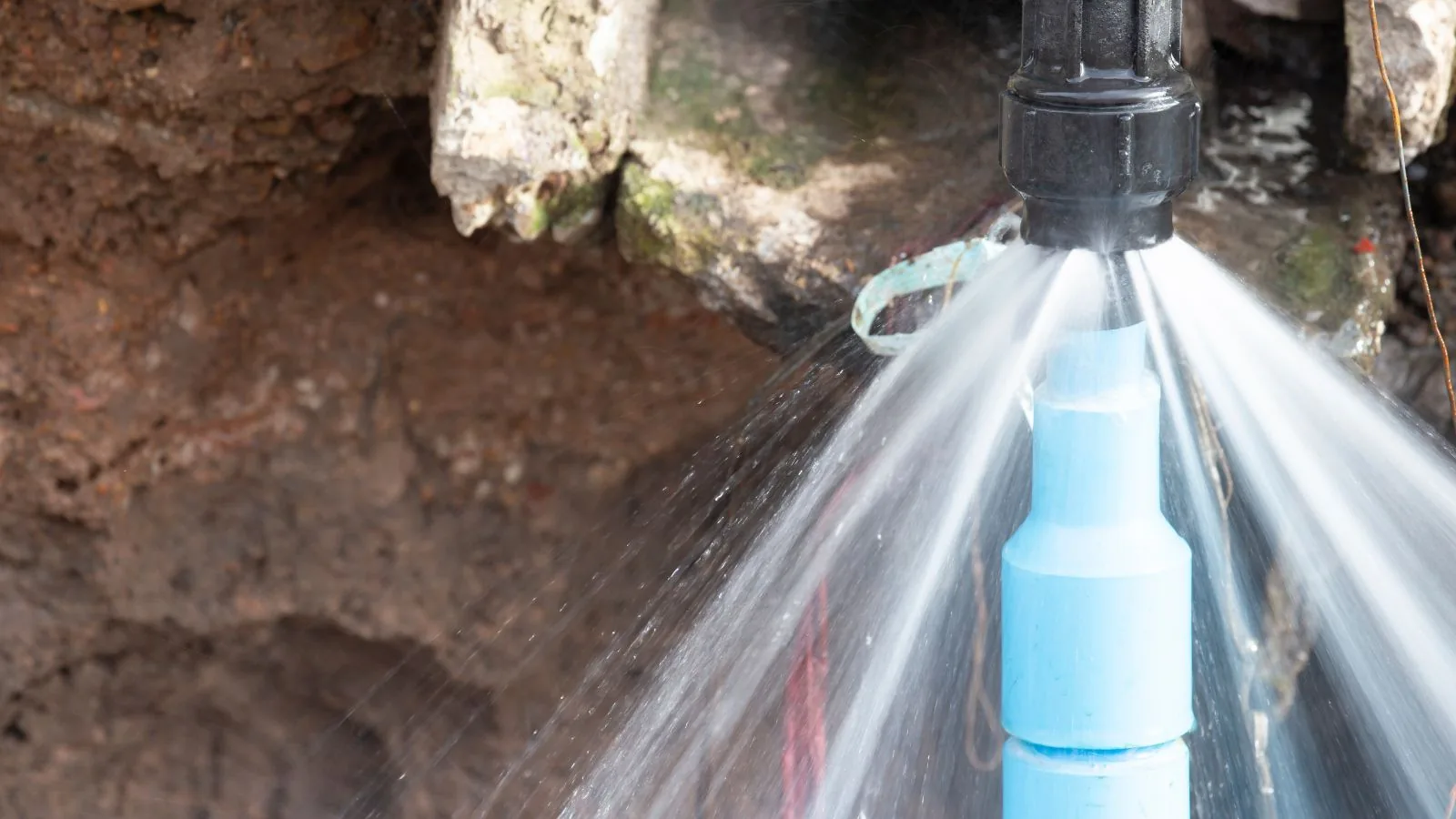
What a burst pipe does inside a house
A burst pipe is a pressurized line that has split, popped a fitting or pulled out of a joint. Unlike a slow drip, it releases water at full line pressure, which is why a single failure can wet several rooms within the hour. The cleanup starts with stopping the water and ends with a dry structure.
This page covers pressurized supply lines. A line that froze and thawed has its own page on frozen pipe damage, and a failure inside a tank is covered under water heater leaks.
When a burst pipe becomes an emergency
If water is spraying or pouring, treat it as an emergency right now. Go to the main shutoff, which in many Florida homes sits near the street side of the house or at the meter box, and close it. Then open a faucet at the lowest point to drain the line.
After hours, a call to this line is the right second step. We answer 24/7 and send extraction and drying crews when they are available for Dunedin. Do not wait for morning if the floor is wet, because wet drywall and subfloor start absorbing from the first minutes.
From shutoff to dry building
Here is the usual order of work on a burst pipe loss.
Stop and document
The water is shut off, then photos and video of wet areas are taken before anything is moved. These help with an insurance claim.
Extract and open up
Standing water is pulled out. Wet baseboards, saturated insulation or ruined pad may be removed so air can reach what is left.
Dry with equipment
Air movers and dehumidifiers run while moisture meters track progress until readings match dry reference materials.
The plumber repairs the pipe. The restoration crew handles the water it released. These are two different jobs, and you may need both.
Where the water goes after a burst
Pressurized water takes predictable paths. Knowing them tells you where to look.
| Pipe location | Typical wet areas | What to check |
|---|---|---|
| Inside a wall | Drywall, baseboards, flooring along the wall | Moisture behind the wall, even when paint looks fine. |
| Under a sink or vanity | Cabinet base, floor, adjacent rooms | Cabinet floors and subfloor beneath the cabinet. |
| In an attic or ceiling space | Ceiling, insulation, walls below | Ceiling stains, sagging, and wet insulation above. |
| Under a slab or in a crawl space | Floor surfaces, subfloor, joists | Warm spots, hissing, or unexplained moisture. |
Pipe still running?
Close the main valve, then call. The line is open 24/7.
Copper, PEX and older supply lines
Pipe material affects how and why lines fail. Older galvanized steel corrodes from the inside. Copper can pit or split at joints. PEX tubing resists freezing damage but can fail at fittings or when it is stressed. None of this tells you what failed in your house, but it explains why a plumber will want to inspect more than the single split.
If your home has original supply lines from the decade it was built, ask a licensed plumber about their condition after a burst. Dunedin has older neighborhoods near downtown and the Historic Southside, and a failure in one line can mean other sections have the same age and wear.
What drives the cost of burst pipe cleanup
Prices vary with the loss. These are the factors that set them.
- Water categoryA clean supply line is Category 1 at the start. Water that sits for days can degrade to Category 2.
- Rooms and square footageWater travels. The number of rooms and floor area wet sets equipment counts.
- MaterialsHardwood, carpet and cabinets respond differently to soaking, and some cannot be dried in place.
- Drying daysEquipment runs until readings come down. That time is priced after moisture mapping.
- Rebuild scopeRemoved drywall and flooring have to be replaced. That is a separate scope from mitigation.
A sudden, accidental pipe burst is often covered by homeowners insurance, while long-term leaks and neglect often are not. Check your policy and ask your insurer what applies. We explain scope and price before work starts, and you can call for your actual number.
If the water came from somewhere else
Not every plumbing failure is a burst line. A pipe that froze and thawed has its own page on frozen pipes, a tank failure is covered under water heater leaks, and a supply line behind a machine is on the appliance leak page. Once the water is out, structural drying explains how the building is dried.
Safety steps before the crew arrives
Shut off the main water valve first. Stay out of rooms where water is near outlets, and do not use electrical devices while standing in water. If a ceiling is sagging with trapped water, keep people out from under it.
Lift small valuables and papers to a dry spot, photograph the damage and then call the line. The ANSI/IICRC S500 standard, which guides professional drying, assumes the source has been stopped before drying starts.
Burst pipe questions in Dunedin
Yes. This line answers 24/7. Shut off the main water valve first, then call so we can plan extraction and drying.
Look for a valve where the line enters the house, near an exterior hose bib, or at the meter box near the street. If you cannot find it, the City of Dunedin Water Division can help you identify the meter location.
Stop the water, then call both. The plumber fixes the pipe and the restoration crew removes water and dries the structure. Calling us does not delay the plumber.
It depends on how much of the house is wet and whether power is affected. Dry rooms away from wet areas are often usable. Avoid any room with wet electrical outlets.
Look for bubbling paint, a musty smell, warm or cool damp spots, or baseboards lifting. A moisture meter or thermal camera confirms it.
Burst pipes in Dunedin
Water supply in Dunedin comes from the City of Dunedin Water Division, which pumps from the Floridan aquifer and treats the water at the city's reverse osmosis plant. If you shut off your home's main and the water still runs outside, the problem may be on the city side of the meter, and the utility should be your next call.
If the burst happened in a home near Hammock Park, along Pinehurst Road or in the Scotsdale subdivision, the steps are the same. Stop the source, document, then call.