

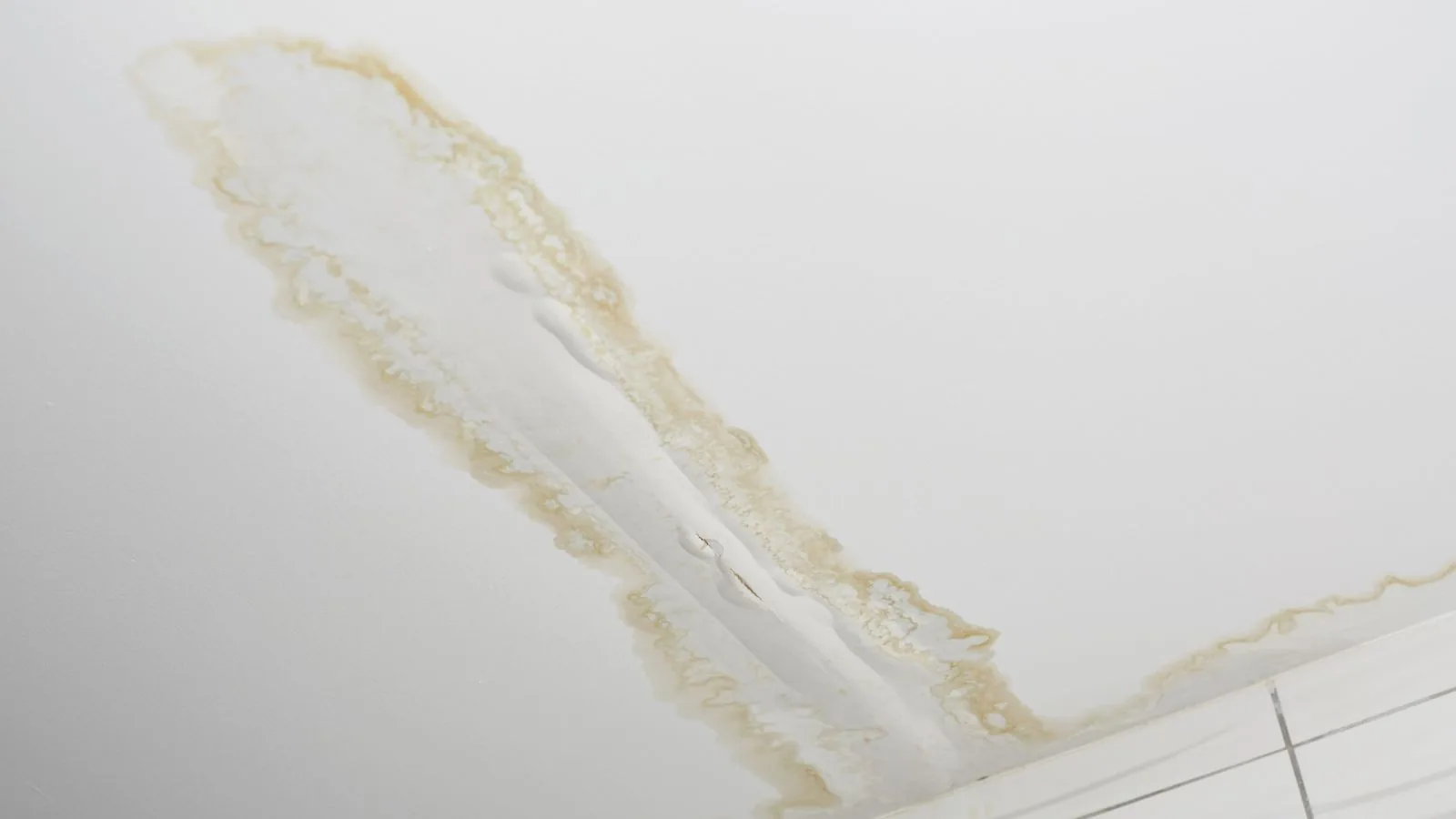
A wet ceiling is holding weight it was not built for
Ceiling water damage is any wetting of the finished ceiling and the space above it. Drywall that absorbs water gets heavy, can bulge and may collapse. Insulation above it holds water too, so a stain that looks small can hide a large wet area.
The source can be a roof leak, an upstairs bathroom, a supply line or an air handler in the attic. Roof leaks do not have a separate page here, so they are covered in a section below.
When a ceiling stain is an emergency
Call now if the ceiling is sagging, dripping, or has a dark brown stain that is growing. Water pooled in a bulge can release all at once. Keep people and pets out of the room, and put a bucket under a drip.
If the water seems to come from light fixtures or the ceiling fan, stay away from the switch and call the utility or 911 for any electrical risk before you call us. The line is open 24/7.
Before help arrives
These steps reduce the risk and the damage.
Clear the area
Move furniture and electronics out from under the stain.
Relieve a small bulge only if safe
Poking a small hole in a bulging ceiling with a screwdriver, with a bucket below, can drain pooled water. Do not do this if you are unsure or if electrical fixtures are nearby.
Stop the source if you can
If the source is an upstairs fixture, close its shutoff. Roof leaks need a different fix.
Take photos
Photograph the stain and any dripping for your insurer.
Roof leak water damage
A roof leak is the most common outside source of ceiling water. Water enters through damaged shingles, flashing or a penetration, runs along rafters or decking and drips from a point that may be far from the actual hole. Florida storm seasons and heavy summer rain make this a recurring issue.
A roofer fixes the opening. The restoration crew deals with the wet insulation, drywall and framing below it. If the roof is not repaired, the next rain will wet the ceiling again, so treat these as two linked jobs.
Ceiling stain clues
The pattern of a stain gives hints about the source.
| What you see | Likely source | Next step |
|---|---|---|
| Ring-shaped stain with darker edge | Repeated wetting from a slow leak | Find the source and check for hidden mold-prone moisture. |
| Sudden bulge or drip | Pooled water from a recent leak | Clear the room, call the line, and avoid the area. |
| Stain below a bathroom | Supply or drain line above | Shut off the fixture and inspect the plumbing. |
| Stain near a vent or air handler | Condensation or a clogged drain line | See the AC leak water damage page. |
Ceiling stain growing?
Call the 24/7 line and describe the stain. A dispatcher will help you decide the next step.
How ceiling damage is repaired
Crews check moisture in the ceiling, insulation and framing. Wet insulation is removed. A sagging or bulged ceiling section is cut out, because drywall that has held water is weak and can grow mold. The area is dried with air movers and dehumidifiers before repair.
When walls are also wet, the wall and drywall repair page explains that part. Drying is covered in the structural drying guide.
What affects ceiling repair costs
Ceiling jobs have a wide range.
- Source and sizeA small drip is different from a full room of wet ceiling.
- InsulationWet insulation is removed and replaced.
- AccessHigh ceilings and attic access add labor.
- Finish workTexture, paint and matching add to repair scope.
- Roof repairThe roofer's work is separate from restoration.
Insurance often covers sudden water damage from a storm opening in the roof, and often does not cover leaks from long-term wear. Check your policy and ask your insurer. We explain scope and price before work starts.
When the stain points to a bigger problem
A ceiling stain is often the visible end of water that traveled. A leaking line upstairs is explained on the burst pipe page, a stained corner under an air handler on the AC leak page, and a soaked ceiling after wind and rain on the storm water damage page.
Standards behind this page
Professional drying practice follows the published ANSI/IICRC S500 standard. It is why a stained ceiling is checked with moisture readings above and around the stain, not judged by color alone.
Ceiling water damage questions in Dunedin
Yes. This line is open 24/7, including nights and weekends. If the ceiling is sagging, call right away.
No. Stains can come from upstairs plumbing, an air handler or condensation. A moisture meter and a look above the ceiling confirm the source.
Painting hides a stain but does not dry the wet materials above. Moisture left inside can grow mold, and the stain will return.
Yes. Wet drywall can fall without warning. Keep people out of the room until the ceiling is checked.
A roofer repairs the roof. We deal with the water damage inside. If a storm opened the roof, tell your insurer and a roofer before more rain.
Ceiling leaks in Dunedin homes
Heavy summer rain and tropical storms in Pinellas County put roofs to the test. Homes in older areas near downtown Dunedin and the Pinellas Trail corridor may have roofs that have been repaired more than once.
If your ceiling stain shows up after a storm, check your roof as soon as it is safe. Ask the City of Dunedin building department whether your roof repair needs a permit before work begins.