

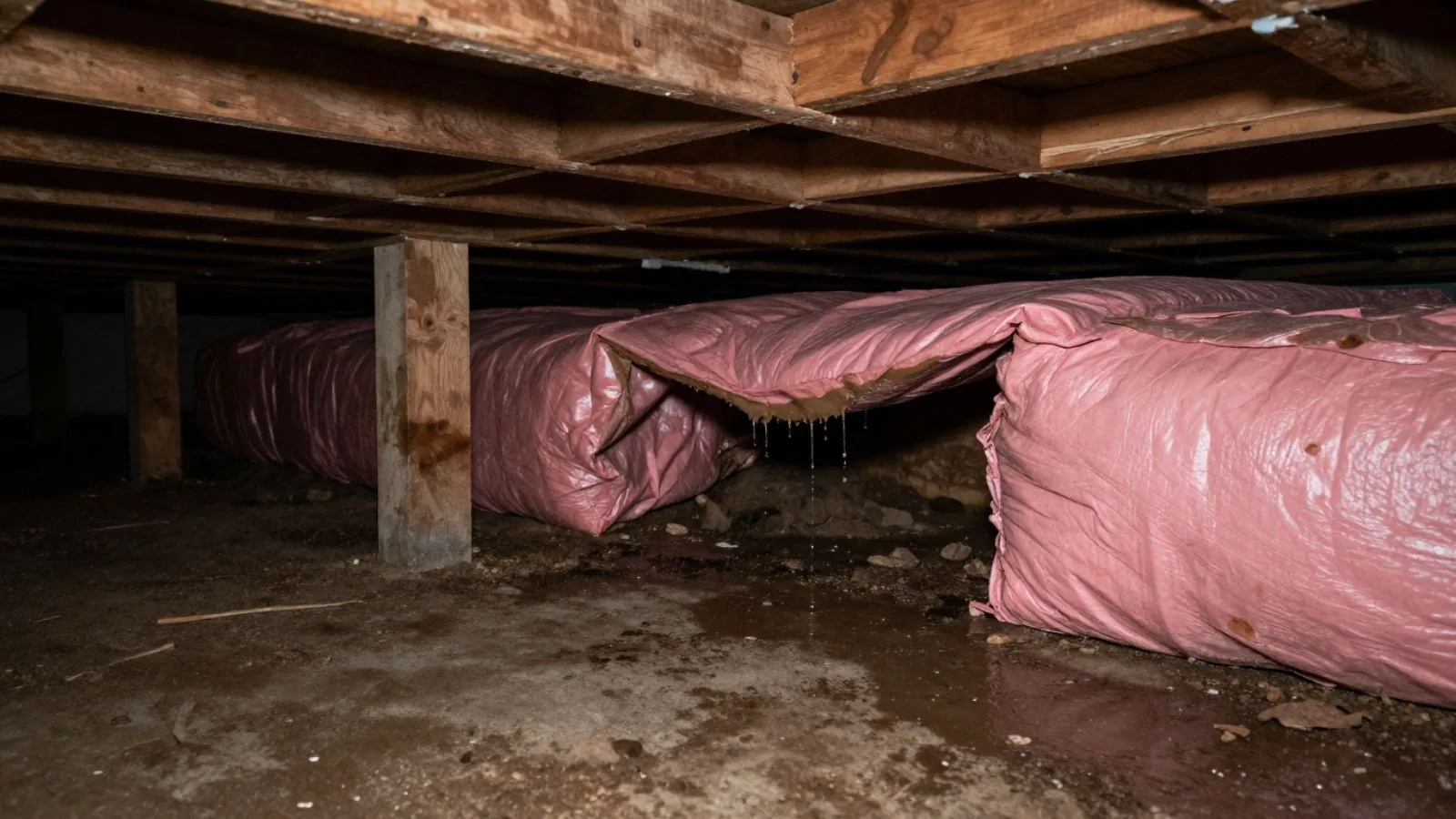
What crawl space water damage looks like
A crawl space is the shallow, unfinished area under a raised floor. When water gets in, it soaks insulation, floor joists, the underside of the subfloor and any ductwork or plumbing running through it. The problem is easy to miss, because no one lives there and the damage shows up first as a musty smell, a soft floor or humidity inside.
This page applies to homes with a raised foundation. If your home is built on a slab, a leak under the floor is a different problem, covered on the slab leak page.
How water gets into a crawl space
Common sources are plumbing leaks, a clogged or overflowing condensate line, drainage that runs toward the house and storm water that pools around vents. Humid air that settles on cool surfaces is a source of moisture too.
In Pinellas County, a high water table and heavy rain can leave low spots wet for days. Whether a crawl space is a concern for your home depends on how the house was built, so ask a contractor who can see it.
Signs the crawl space has a moisture problem
Look for these clues from inside and outside.
Musty odor
A smell that rises through the floor vents.
Soft or bouncy floor
Joists or subfloor that stayed wet can soften.
Sagging insulation
Wet batts drop away from the floor above.
Standing water or damp soil
Visible water at the access hatch.
How a crawl space is dried
The work has to be done in a tight space.
Make it safe
Check power and plumbing, and wear protective gear.
Remove water and wet insulation
Extract standing water and take out batts that cannot dry.
Dry and monitor
Use air movers and a dehumidifier, and take moisture readings.
The goal is to return wood to a safe moisture reading, not to make the space look dry.
Why crawl space moisture matters for the rooms above
Air moves between a crawl space and the living area through floor gaps, plumbing penetrations and duct leaks. Damp air below carries that moisture and any odor upward, which is why a wet crawl space can raise indoor humidity and leave a musty smell in closets and cabinets.
Wood framing that stays damp also loses strength over time. A contractor can check joists and the subfloor with a moisture meter before deciding what needs drying and what needs replacement. Do that before covering anything with new insulation or a vapor barrier.
Moisture under your floor?
Call the line and describe what you see.
Crawl space damage by building part
Each material responds differently.
| Building part | What water does | Typical action |
|---|---|---|
| Insulation | Absorbs water and sags | Remove and replace. |
| Floor joists | Wet wood can hold moisture | Dry and measure. |
| Subfloor underside | Swells or stains | Dry, check for mold. |
| Ductwork | Condensation and wet insulation | Inspect and dry. |
What drives crawl space cleanup costs
Access is a major factor.
- Access and heightTight spaces take longer.
- Water amountStanding water versus damp soil.
- Insulation and material removalWet items removed and replaced.
- Drying timeBased on readings.
- Moisture controlA vapor barrier or drainage fix is a separate job.
Insurance may cover sudden leaks but often not seepage or neglect. Check your policy and ask your insurer. We explain scope and price before work starts.
How crawl space water reaches the house above
Moisture below the floor rises into the living space. Wet subfloors affect the hardwood floor and carpet pages, standing water is removed as described under water extraction, and the structural drying page explains how framing is dried.
Safety steps before you enter
Do not enter a crawl space with standing water, strong odors or exposed wiring. Wear a respirator, gloves and eye protection if you must look inside, and never go in alone.
Call the line first and describe what you see from the access point.
Crawl space questions in Dunedin
No. Restoration removes water and dries what got wet. Waterproofing or drainage repair is a separate trade, and a contractor in that field can advise you.
It can be if the water is contaminated or near electrical wiring. Avoid it and call for help.
Many Florida homes are slab-on-grade. If you have a raised floor, ask a contractor or check your home's plans.
It depends on moisture levels and equipment. Crews take readings until they match dry reference values.
Moisture that persists can lead to mold. The mold remediation page explains the standard that applies.
Raised homes in Dunedin
Some older Dunedin homes may sit on raised foundations with a crawl space, and many others are built on slabs. Your home's foundation type decides which page applies, so check yours before calling.
If your home has a raised foundation, ask the City of Dunedin building department about permit needs for repairs to the foundation or flooring.