

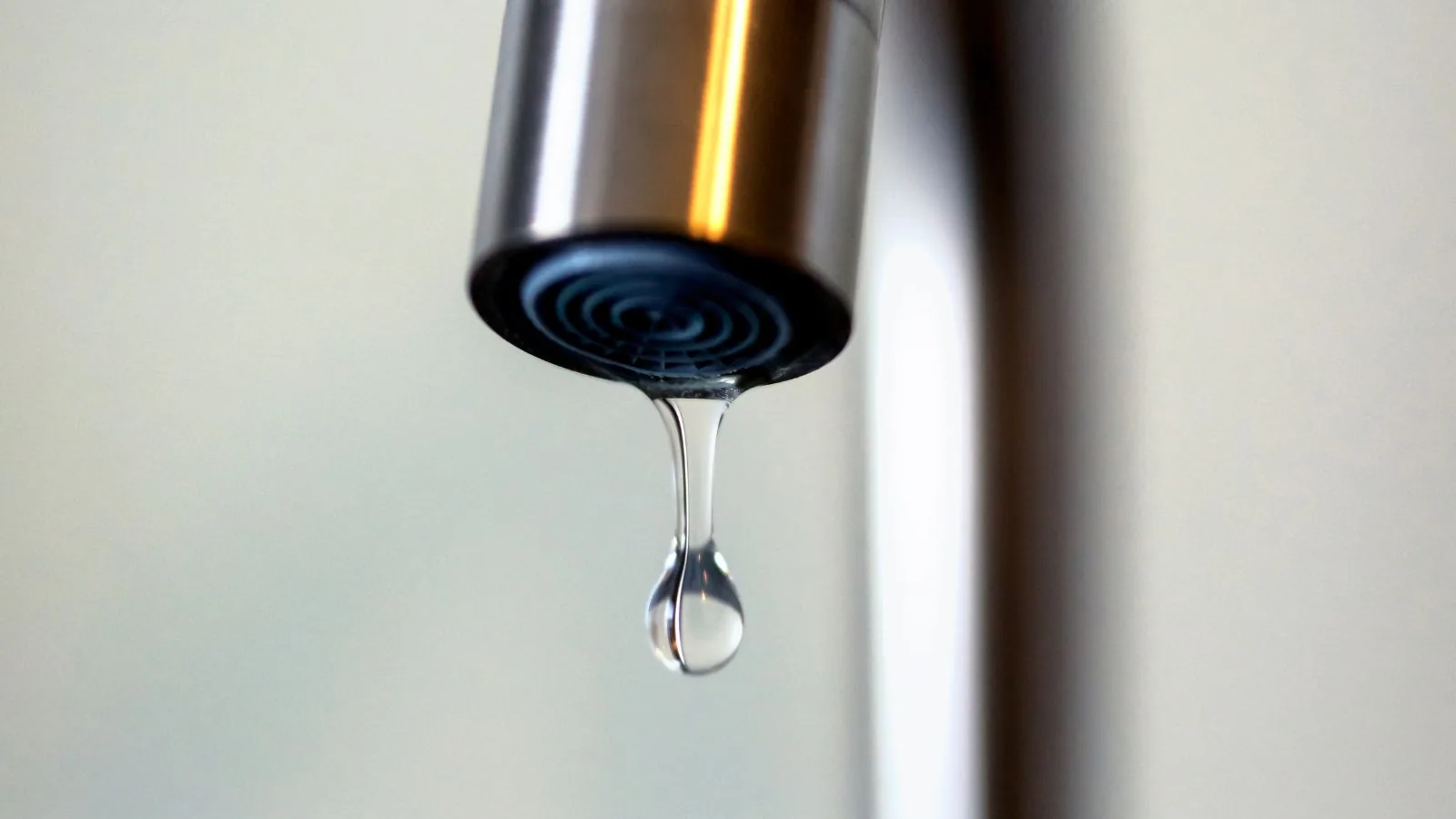
Why kitchen leaks do so much damage
A kitchen packs water sources into a few square feet. The sink supply lines, the drain trap, the dishwasher hookup and the refrigerator ice maker line all sit inside or beside cabinets. A small drip behind the sink can run for weeks and soak the cabinet floor.
This page covers the kitchen room, with cabinets, flooring and the sink area. If the dishwasher or refrigerator itself failed, the appliance leak page covers that source.
Water under the sink
Under-sink leaks come from loose connections, cracked supply lines, a failing garbage disposal or a clogged drain. Particleboard cabinets are made from wood chips and glue, and they swell and break down when wet. Solid wood and plywood cabinets handle moisture better but still need drying.
Look for stains in the cabinet floor, a musty smell, warped cabinet sides and a wet toe kick. If you see them, close the supply valves under the sink and call.
What kitchens lose to water
Damage depends on the material.
Particleboard cabinets
Swell, soften and often need replacement.
Plywood and solid wood cabinets
Often dry well if treated promptly.
Flooring
Vinyl, tile, laminate and wood react differently.
Walls and baseboards
Drywall behind cabinets wicks water.
Dishwasher, disposal and refrigerator lines
Several kitchen leaks start at connections that are out of sight. The dishwasher drain hose runs through the cabinet and ties into the disposal or the sink drain. A refrigerator ice maker uses a thin supply line that can crack. A disposal can leak from its seals or its drain flange.
If you see a wet cabinet floor but the sink looks dry, check these connections too. A plumber can trace the leak, and the restoration crew handles what was soaked.
Countertops, backsplashes and the wall behind them
Water that runs down behind a countertop or backsplash wets the drywall behind it, where cabinets hide the damage. Stone and laminate surfaces themselves usually survive, but the particleboard or plywood under a laminate top can swell, and caulk lines can trap moisture.
Have the wall opened enough to read moisture behind the cabinet run. If the drywall stays wet, it becomes a mold risk, and the wall and drywall repair page explains how wet walls are handled.
Cabinets wet or swollen?
Call and describe what you see.
How kitchen water damage is handled
The work follows the water.
Stop and extract
Close the valves, remove standing water and empty the cabinet.
Open up and dry
Remove toe kicks and affected baseboards, and use air movers and a dehumidifier.
Decide on repair
Check cabinets and flooring with a moisture meter and decide what can be saved.
Drying a kitchen can take days, because cabinets and countertops hold water.
Kitchen materials and drying
Different materials need different decisions.
| Material | What water does | Likely action |
|---|---|---|
| Particleboard cabinet base | Swells and crumbles | Replace. |
| Plywood cabinet | Can warp but often dries | Dry and test. |
| Laminate flooring | Edges swell | Often replace. |
| Tile floor | Water slips under | Check subfloor. |
What drives kitchen restoration costs
Costs depend on the kitchen's finishes.
- Cabinet typeParticleboard is often replaced.
- FlooringMaterial and extent.
- Hidden moistureBehind cabinets and under floors.
- Drying timeBased on readings.
- RebuildCabinet and countertop replacement is separate.
Insurance often covers sudden kitchen leaks but often not slow leaks over time. Check your policy and ask your insurer. We explain scope and price before work starts.
Safety steps while you wait
Shut off the water and, if the area near the stove or refrigerator is wet, keep the power off until an electrician says it is safe. Do not open a refrigerator that sat in water.
The published ANSI/IICRC S500 standard guides drying behind cabinets and under flooring, where trapped moisture hides.
Kitchen water damage questions in Dunedin
Sometimes. Plywood and solid wood often dry. Particleboard that has swollen usually needs replacement.
Sometimes, if water is under it. The crew checks.
Often not, if it happened over time. Check your policy and ask your insurer.
Several days, depending on materials and moisture.
Persistent moisture can lead to mold. See the mold remediation page.
Kitchen leaks in Dunedin homes
Many Dunedin kitchens have original cabinets in older homes near downtown and the Historic Southside. Older cabinet bases and old shutoff valves are common leak points.
If you are replacing cabinets after water damage, ask the City of Dunedin building department whether the work needs a permit.