

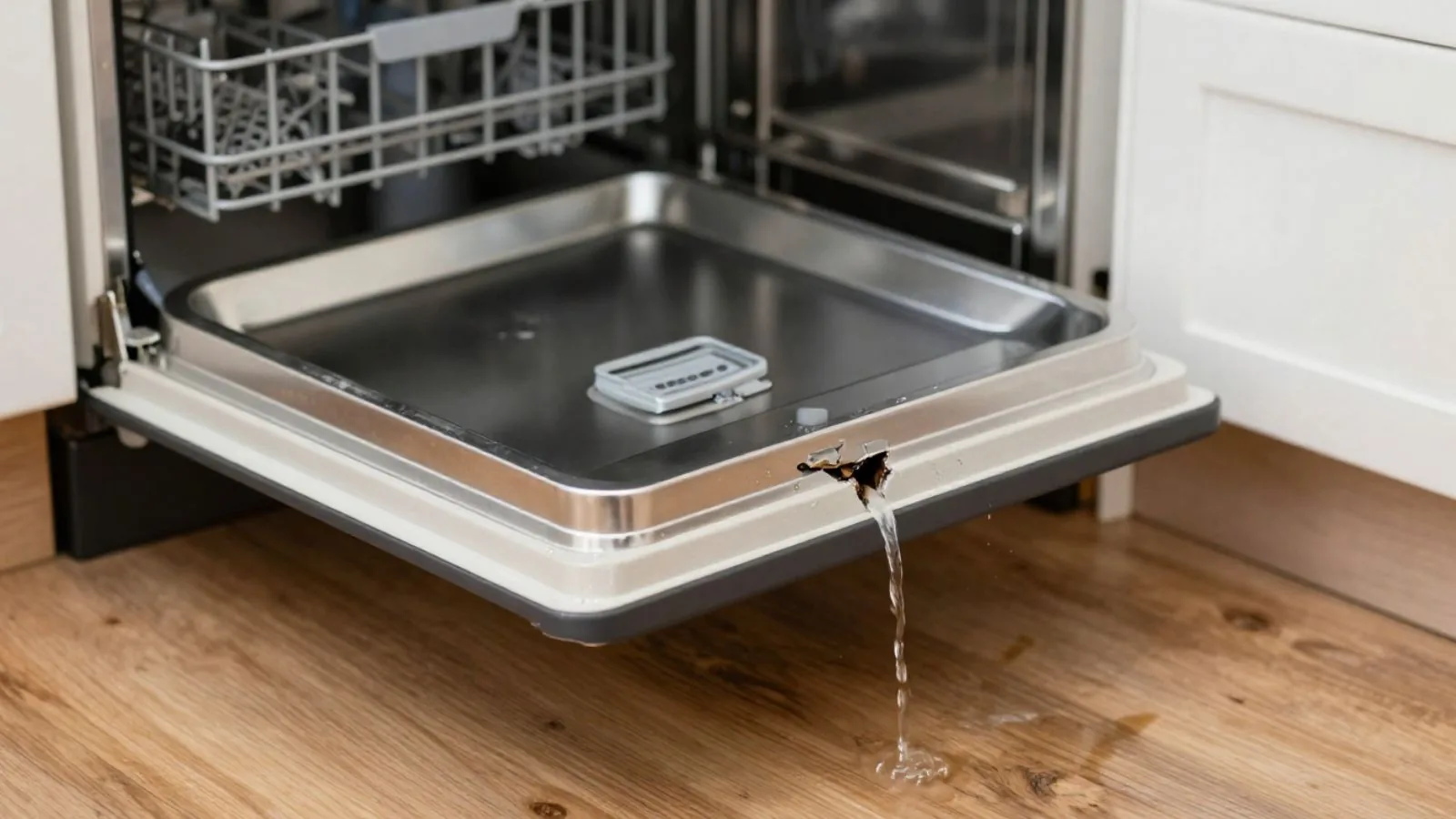
Appliance leaks start at hoses and valves
Most appliance water damage comes from a short list of parts. Washing machine supply hoses, dishwasher inlet valves, refrigerator ice maker lines and drain connections fail more often than the appliances themselves. A hose can give way while no one is home, which lets water run for hours.
This page covers the appliance as the source. If the water reached cabinets and a kitchen floor, the kitchen water damage page covers that damage, and a failed tank heater is on the water heater leak page.
When an appliance leak is an emergency
Water spreading from a washer or dishwasher is an emergency if it has reached flooring or the walls. Look for a wet floor beyond the appliance, a damp wall behind it or water dripping from a ceiling below.
If the leak is above a lower floor, in a condo or in a townhome, water may be reaching a neighbor. Tell the neighbor or property manager right away, and call this line, which is open 24/7.
Common appliance leak sources
Each appliance has its own weak points.
Washing machine
Supply hoses, drain hose connections and overflow from a clogged drain.
Dishwasher
Door gasket, inlet valve and drain hose clamp.
Refrigerator
Ice maker supply line and defrost drain.
Water softener and filters
Fittings, resin tank connections and drain lines.
Hidden damage behind and under appliances
The wet spot you can see is often smaller than the wet area you cannot. Water from a washer or dishwasher runs under the machine, into the cabinet toe kick and along the base of the wall. It can travel under vinyl and laminate planks where only a moisture meter will find it.
After a leak, ask the crew to check the wall behind the appliance, the cabinet base next to it and the floor several feet away. Slow, hidden moisture is how a small leak becomes a mold problem a few weeks later, which is why the readings matter more than the surface.
Floor wet near an appliance?
Close the valve and call. The line is open 24/7.
What to do while you wait
Close the appliance's shutoff valve. For a washer, there are two valves on the wall box. If you cannot reach one, close the main. Unplug the appliance only if the floor and outlet are dry.
Pull the appliance away from the wall if it is safe to move, and lift anything off the floor. Mop only small amounts and leave deeper water to extraction. Take photos of the appliance, the hose and the wet areas.
What gets wet and what can be saved
Water follows the floor and the wall base.
| Material | Typical result | Action |
|---|---|---|
| Vinyl or tile | Water slips under seams and edges | Moisture readings under seams. |
| Laminate and hardwood | Planks absorb at edges and swell | Prompt drying, sometimes removal. |
| Carpet and pad | Pad holds water | Extract, dry or replace pad. |
| Drywall and baseboards | Wick water upward | Moisture mapping and drying. |
What drives appliance leak cleanup cost
Appliance losses are usually smaller than burst pipes, but the floor determines the cost.
- Flooring typeHardwood and laminate cost more to dry or replace.
- Water spreadOne room versus several.
- Hidden moistureBehind cabinets and under flooring.
- Drying timeSet by readings.
- Appliance repairA technician or plumber handles the appliance.
Insurance often covers sudden appliance leaks, and often excludes long-term leaks or wear. Check your policy and ask your insurer. We explain scope and price before work starts.
Related leaks from the same kitchen and utility room
A dishwasher or washer line fails the same way a plumbing line does, so the burst pipe page explains what a full pressure leak does. Water that slipped behind cabinets is a wall and drywall job, and the drying that follows is explained under structural drying.
Standards behind this page
Industry practice for water damage follows the published ANSI/IICRC S500 standard, which sorts water into categories by contamination. Supply line water starts clean but can degrade as it sits in carpet and pad, which is why the standard ties the category to time and conditions, not only to the source.
Appliance leak questions in Dunedin
Yes. The line answers 24/7, including nights and weekends.
Many manufacturers and installers suggest replacing rubber supply hoses periodically and using braided hoses. Check your manual.
Common causes are a worn door gasket, a loose drain hose clamp or a failing inlet valve. An appliance technician can diagnose it.
Notify the neighbor and property manager promptly, and notify your insurer. Document the damage with photos.
Sometimes, if drying begins quickly. Cupped or gapped boards may need replacement. See the hardwood floor page for details.
Appliance leaks in Dunedin homes
Dunedin has single-family homes, townhomes and condominiums, and leak response differs in each. In multi-unit buildings, water can pass through floors to units below.
If your home sits on a slab, as many Florida homes do, water from a washer can spread along the slab surface and wick into baseboards. Quick extraction limits that.