

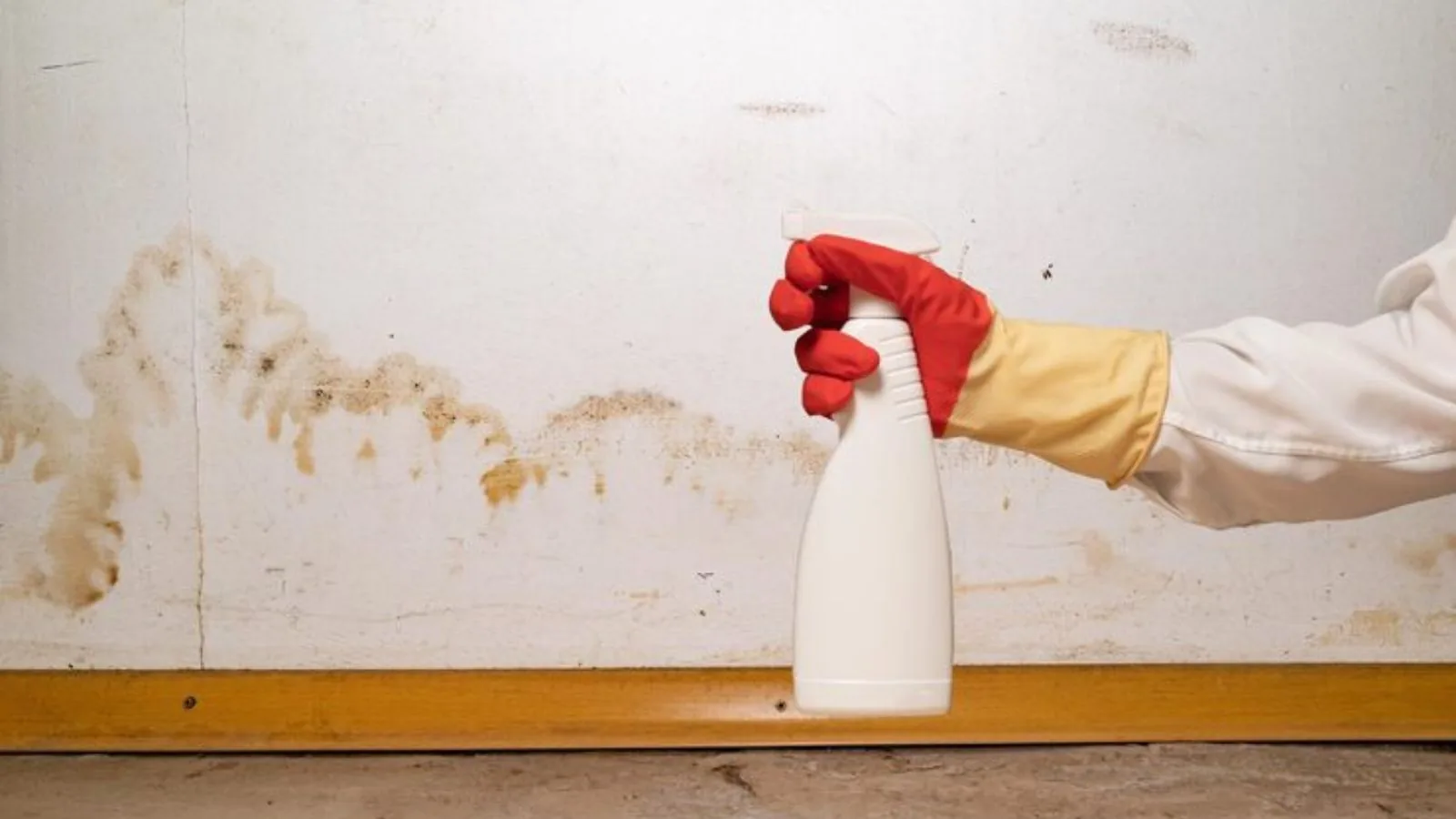
Start with the moisture, not the mold
Mold grows where materials stay wet. Wiping a patch of mold off a wall without fixing the leak behind it only clears the surface, and the mold usually returns. Before you pick up a sponge, find the water source and stop it.
That can be a dripping fitting under a sink, a clogged air conditioner condensate line, a roof leak or a bathroom that never dries. The U.S. Environmental Protection Agency says it is important to dry water-damaged areas and items within 24 to 48 hours to prevent mold growth, and that if materials are dried in that window, mold in most cases will not grow.
How big is the patch?
The EPA's homeowner guide says that if the moldy area is less than about 10 square feet, roughly a 3 foot by 3 foot patch, you can in most cases handle the job yourself. Larger areas, mold that came back after cleaning and mold in hidden spaces call for more help.
The EPA also recommends calling a professional for sewage or other contaminated water damage. If the mold followed a flood, a backup or a long leak that soaked insulation, treat it as a bigger job. The mold remediation page explains how professional work is done.
Gear to wear before you start
Protect your lungs, skin and eyes. The EPA guide recommends these items.
- An N-95 respirator that fits you properly. A loose mask does little.
- Long gloves that reach the middle of the forearm, made of natural rubber, neoprene, nitrile, polyurethane or PVC when you use disinfectants or bleach.
- Goggles with no ventilation holes.
- Old clothes you can wash right away, and open windows or an exhaust fan pointed outdoors.
Cleaning hard surfaces step by step
For a patch on tile, glass, metal or sealed countertop, scrub the area with detergent and water, rinse with clean water and dry it completely. Work from the edge of the patch inward so you do not spread spores across a clean area, and bag the rags and sponges when you are done.
The EPA says that using bleach as a routine part of mold cleanup is not recommended. If you do use a bleach solution, never mix it with ammonia or with cleaners that contain ammonia, because toxic fumes can result. The EPA also notes that killing mold is not enough, because dead mold still needs to be removed.
What to do with different materials
Porous materials absorb mold, so they are treated differently.
| Material | Typical approach | Notes |
|---|---|---|
| Tile, glass, metal | Scrub, rinse and dry | Can usually be cleaned. |
| Painted drywall, small patch | Clean and dry, then monitor | If it stays soft or returns, the wall is wet inside. |
| Ceiling tiles and insulation | Remove and replace | Porous and hard to clean. |
| Carpet and pad | Usually remove | Hard to dry once mold has set in. |
| Wood framing | Clean and dry, ask a pro if it is deep | Check moisture with a meter. |
Do not paint over it
The EPA advises against painting over mold. Paint applied over a moldy surface is likely to peel, and the mold underneath keeps its food and moisture. Clean the area, dry it fully and then repaint.
If a stain stays or the paint bubbles again within weeks, moisture is still getting in. That is a sign to look for the source again, and to consider having moisture readings taken behind the wall.
When to stop and call
Stop and call if the area is larger than about 10 square feet, if you smell mustiness but cannot find the source, if mold is inside the air conditioning system or if the mold followed sewage or floodwater. Also stop if the work makes you feel unwell. Health questions belong to a physician.
Call the 24/7 line if there is still active water. A moisture source that is still running is a water damage job first, and the structural drying page explains how hidden moisture is found and dried.
What this means in Dunedin
Dunedin's humid Gulf coast climate keeps indoor moisture high for much of the year, so bathrooms, closets and air conditioner condensate lines are the first places to check. The Florida Department of Business and Professional Regulation licenses individuals as mold assessors and mold remediators, so if you hire someone for a larger job, ask to see the person's state license.
If you are in Clearwater, the same cleaning steps apply, and the Clearwater page explains which city offices handle permits there. The service area page lists the nearby towns we cover.
Standards behind the steps
Professional mold work follows the published ANSI/IICRC S520 standard, while the cleaning limits for homeowners come from the EPA guide. Following both is the reason this page tells you when to stop and call.
Mold removal questions in Dunedin
For a small patch on a hard surface, yes, with protective gear and good ventilation. For larger areas, hidden mold or mold after sewage or floodwater, call a professional.
The EPA does not recommend bleach as a routine mold cleanup step. Drywall is porous, and mold in it usually means the board is wet inside and may need removal.
Moisture is still present. Look for a leak, a clogged condensate line or poor ventilation, and have moisture readings taken if you cannot find the source.
Florida licenses individuals as mold assessors and mold remediators through the Department of Business and Professional Regulation. Ask whoever does the work to show a current license.
Not for a small visible patch. Testing helps document larger jobs, and an independent assessor can do clearance testing after remediation.